The Spectrum Shelf: What Full, Broad and Isolate Really Mean on a Hemp Label
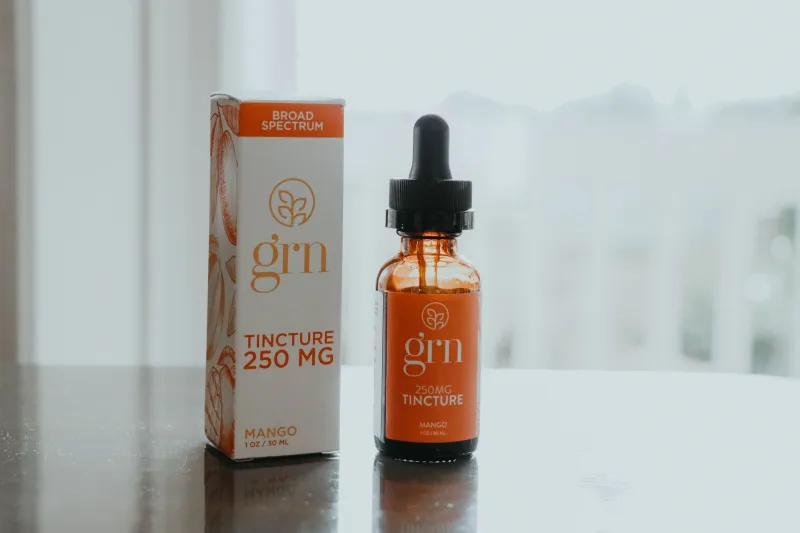
Walk into any independent health shop or scroll through a small-batch hemp website and you will meet the same three words: full-spectrum, broad-spectrum, isolate. They sit on labels like little gatekeepers, suggesting that one is stronger, one is cleaner, one is somehow more serious than the others. In reality, they are simply descriptions of what has been kept and what has been taken away. This is label literacy, not a league table.
The three words you keep seeing
CBD does not arrive from the plant as a single, tidy molecule. Hemp contains a whole cast of compounds — cannabinoids, terpenes, flavonoids, fatty acids — and the spectrum terms describe how much of that cast remains in the finished product. Think of it less as a strength rating and more as a question of company: who is still in the room?
In the UK, these terms are not legally defined in quite the same way as, say, organic certification. They are industry shorthand. That means a small producer’s full-spectrum may look slightly different from a larger one’s, and the label should always be read alongside the batch information rather than instead of it.
Full-spectrum: the whole plant, warts and all
Full-spectrum means the extract has retained as much of the plant’s natural chemistry as the producer can reasonably keep. You will usually find a range of cannabinoids alongside the CBD, plus terpenes — the aromatic compounds that give hemp its earthy, grassy, sometimes citrusy scent. In a small-batch British context, this is often the version described with the most affection. Producers talk about ‘the whole plant’ and ‘keeping things together’ because the process is less about isolating a single compound and more about preserving a profile.
What does that mean in practice? Full-spectrum products tend to have a fuller taste and a more pronounced aroma. Oils can be grassy, slightly bitter, or reminiscent of hay and herbs. That is not a fault; it is the signature of the material. Some people love it. Others find it a bit much on a teaspoon. The texture is usually straightforward — an oil is an oil — but the flavour is where full-spectrum makes itself known.
It is also the category most often wrapped in the language of the ‘entourage effect’, the idea that the compounds work better together than alone. It is a popular idea and a reasonable one to explore, but it is not a promise. The honest label will not claim that full-spectrum guarantees a particular outcome. It will simply tell you what is inside.
Broad-spectrum: the middle path
Broad-spectrum sits between the two extremes. It keeps much of the plant’s wider chemistry — terpenes, other cannabinoids — but removes the THC, or reduces it to a level that is not detectable in standard testing. For anyone who wants a fuller profile without the psychoactive compound, this is often the practical middle ground.
On the shelf, broad-spectrum can be harder to pin down because producers use the term slightly differently. Some remove only THC; others remove a broader set of compounds. The taste is usually softer than full-spectrum but less neutral than isolate. You might notice a gentle hemp flavour rather than a robust one. In small-batch British production, broad-spectrum is often described as a compromise — not in a negative sense, but as a deliberate balancing act between whole-plant character and a cleaner, more predictable profile.
If you are new to hemp oils and unsure about the grassy intensity of full-spectrum, broad-spectrum can feel like a sensible first step. It is also a common choice for people who want to avoid THC entirely without moving all the way to a single molecule.
Isolate: just the molecule
Isolate is CBD and very little else. The extraction process strips away the other cannabinoids, terpenes and plant matter until what remains is a high-purity white powder or a clear, nearly tasteless oil. On the label, it is often presented as the most ‘pure’ option, which is true in a narrow chemical sense but says nothing about whether it is the right choice for you.
In a simple routine, isolate has obvious practical advantages. It has almost no taste, so it disappears into a morning coffee or a smoothie without announcement. It is easy to measure and predictable. For anyone who finds the earthy flavour of full-spectrum off-putting, or who wants to keep their routine as neutral as possible, it is a tidy solution.
The trade-off is that you lose the wider plant profile. Whether that matters is a personal question, not a universal one. Some people are perfectly happy with isolate; others prefer the fuller character of a broad or full-spectrum oil. Neither choice is more virtuous. They are simply different tools for different shelves.
What the labels don’t promise
Here is the quiet part that deserves more space than it usually gets: none of these three terms promises a specific effect. They describe composition, not outcome. A full-spectrum oil is not automatically ‘stronger’ in any meaningful sense, and an isolate is not automatically ‘better’ because it is pure. The words tell you what has been kept, not what will happen.
They also do not tell you about quality. A full-spectrum product can be poorly made; an isolate can be carefully produced. The useful questions are the ones that sit beside the spectrum term: Where was the hemp grown? How was it extracted? Is there a batch number and a recent certificate of analysis? Does the label tell you the amount of CBD per bottle, not just per drop? These are the details that separate a thoughtful product from a vague one.
For British shoppers, it is also worth remembering that CBD products are sold as food supplements, not medicines. The label should not make medical claims, and the spectrum terms should not be read as health promises. They are descriptors, not diagnoses.
Choosing for a simple routine
If you are building a gentle, low-fuss routine, the spectrum question can be answered with a few honest preferences. Do you mind a grassy taste? If not, full-spectrum may feel satisfying and whole. Would you rather avoid THC but keep some plant character? Broad-spectrum is the middle path. Do you want something neutral that disappears into a drink? Isolate is the quiet option.
It also helps to start small. A single bottle, used consistently, will tell you more than a shelf of possibilities. Notice how the product fits into your day — whether you enjoy the ritual of measuring it, whether the taste suits you, whether the bottle feels like something you will actually reach for. The best spectrum is the one you will use.
A quiet note on small-batch language
Small-batch British hemp producers tend to describe spectrum in warmer, less clinical terms. You will see phrases like ‘whole-plant goodness’, ‘gently filtered’ or ‘kept close to the field’. That language can be lovely, and it often reflects genuine care. But it is not a substitute for the basics. A good label will still tell you the spectrum, the CBD content, the batch details and the origin of the hemp. Warm words and clear information can sit on the same bottle.
The three little words on the label are a starting point, not a verdict. Read them, understand them, and then look for the quiet details that tell you how the product was made. That is where the real story usually lives — not in the boldest word on the front, but in the small print on the back.