Mud, Patience and Local Seed: Three British Hemp Growers on the Real Work
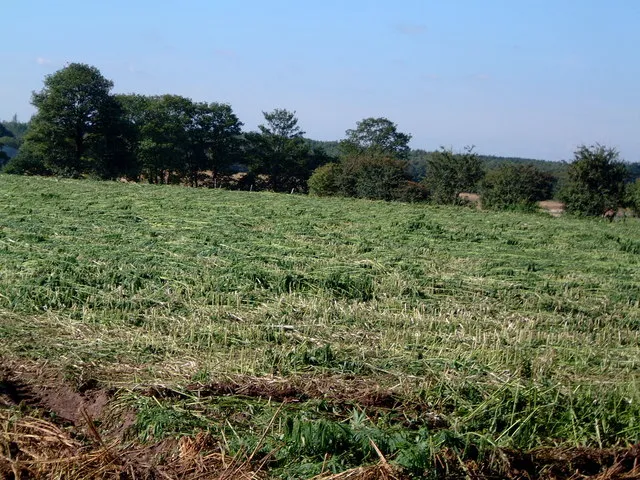
Photo: Ian Simons, CC BY-SA 2.0, via Wikimedia Commons
The romantic version of British hemp growing goes something like this: a few acres, a bright field, a farmer in a good jumper, and a crop that quietly does the right thing. The real version has more mud in it. It has weather that refuses to follow the plan, soil tests that send you back to the drawing board, and a paperwork trail that would surprise anyone who thinks small-scale means simple.
We spoke to three independent growers working at different scales in Wales, Norfolk and Fife. Their stories are not identical, but they share a theme: local hemp is valuable precisely because it is not abstract. It is a crop with a place, a season and a person behind it. And that matters to shoppers more than any leaf motif on a bottle.
Elin, mid-Wales: 'The weather writes the plan'
Elin farms a small holding in Powys with her partner and a borrowed seed drill that has seen better decades. They began growing hemp as a break crop and a way to build organic matter back into tired pasture. In 2026, she says, the learning curve is still steep.
'Hemp is tough, but it is not careless,' she says. 'It likes good soil, it likes decent drainage, and it does not like being messed about. You can prepare perfectly and then get three weeks of rain at the wrong moment. The weather writes the plan. You just try to keep up.'
For Elin, the local angle is not a marketing line. It is practical. Shorter supply chains mean less time between harvest and processing, which matters for seed quality. It also means she can answer questions directly. 'If someone asks what field their oil came from, I can tell them. I can probably show them a photo. That is not a small thing.'
She is cautious about the word 'natural'. 'Everything is natural until someone sprays it or processes it badly,' she says. 'The better question is: is it grown with care, and can you trace it?'
Tom, Norfolk: soil first, shortcuts later
Tom grows hemp on heavier land in Norfolk, alongside cereals and a strip of wildflower margin that his neighbour teases him about. He is the most technical of the three, happy to talk cover crops, compaction and the difference between a good seed bed and a rushed one.
'You cannot fake soil health,' he says. 'You can put a nice label on a bottle, but if the soil is tired and the rotation is lazy, the crop knows. Hemp has a deep root system, and that is one of the reasons I like it. But it is not a miracle plant that fixes bad management.'
Tom sells some of his seed locally and sends the rest for pressing. He says the biggest challenge for small British growers is not demand; it is infrastructure. Drying, cleaning, storage and testing all cost money. A grower with five acres cannot always justify the same kit as a large operation, so co-operation matters.
'There is a lot of talk about local sourcing, and then people want the same price as imported seed,' he says. 'I understand that. But local means shorter journeys, more accountability and a grower who is probably going to be here next year. That has value.'
His advice to shoppers is blunt: look for batch dates, ask where the hemp was grown, and be suspicious of vagueness. 'If a brand cannot tell you the region, that is a choice. They have decided not to tell you.'
Priya, Fife: local is not a sticker
Priya runs a small mixed farm near the Fife coast with a focus on seeds and botanicals. She started growing hemp five years ago after a neighbour suggested it as a way to diversify. Her crop is modest, but her standards are precise.
'Local is not a sticker you put on a bottle,' she says. 'It is a chain of decisions. Where does the seed come from? How is it cleaned? Who presses it? How is it stored? If any of those links are weak, the word local is doing less work than people think.'
Priya is particularly interested in soil health and water management. Her land drains quickly, which helps in wet years and hurts in dry ones. She keeps detailed field notes and says the 2026 season has been a lesson in patience. 'You cannot rush a seed crop. You can only give it the best conditions you can and then wait.'
She also worries about the language used around hemp. 'Some of it is overblown,' she says. 'It is a useful crop. It is a good crop. But it is not magic. Shoppers deserve honest talk, not fairy dust.'
Her hope is that British shoppers will start asking better questions rather than simply looking for the cheapest bottle. 'A small grower cannot compete on volume. We can compete on care and traceability. But only if people value those things.'
What their stories ask of shoppers
The three growers are not asking for sympathy. They are asking for attention. British hemp is a real agricultural story, not just a wellness aesthetic. It involves weather risk, soil management, local processing and the quiet economics of small-scale farming.
For shoppers, that translates into a few useful habits. Look for the region. Look for a batch date. Look for a brand that can explain the difference between hemp seed oil and CBD oil without blurring them together. Ask whether the hemp is British-grown or simply British-blended. Both can be legitimate, but they are not the same claim.
At 3 Little Birds Hemp, we like the small-batch story because it keeps the questions close. It is harder to be vague when the field is a few hours away and the grower knows your name. That does not make every small product perfect. It does make it easier to find out what you are buying.
And perhaps that is the real value of local hemp. Not romance. Not hype. Just a shorter distance between the soil and the shelf, and a better chance of getting a straight answer.